✨ This article was AI edited. Editorial responsibility: RecipesFromTheHomestead.com.
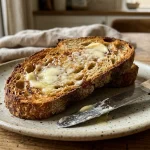
Store-bought artisan vegan butters can cost upwards of eight dollars for a small eight-ounce block. Yet with a few inexpensive pantry staples and ten minutes of active blending, you can craft fresh, cultured, European-style plant butter in your own homestead kitchen. This homemade butter melts smoothly across hot sourdough, creams into fluffy cookie doughs, and browns beautifully in a skillet without palm oil or artificial preservatives.
The Physics of Emulsification: Why Lecithin & Ice Matter
Butter is chemically an emulsion—specifically, droplets of water suspended in a continuous matrix of solid and liquid fats. When making butter from cow’s milk, natural milk proteins (casein) and phospholipids act as emulsifiers. When building butter from plants, we must intentionally construct this emulsion.
| Ingredient Component | Functional Role | Optimal Percentage | Culinary Substitute |
|---|---|---|---|
| Refined Coconut Oil (Melted) | Provides firm structure and a sharp melt point at 76°F | 50% of total fat | Refined cocoa butter (creates an even firmer block) |
| Neutral Liquid Oil (Avocado / Canola) | Ensures plasticity and spreadability straight from fridge | 35% of total fat | Light olive oil, high-oleic sunflower oil |
| Raw Cashew Milk / Soy Milk | Supplies natural plant proteins to brown and trap moisture | 12% by volume | Unsweetened organic soy milk (rich in natural proteins) |
| Liquid Sunflower Lecithin | Master emulsifier; binds water and oil molecules together | 1 teaspoon per cup | Liquid soy lecithin or non-GMO soy lecithin granules |
| Vinegar & Nutritional Yeast | Simulates cultured lactic acid tang and rich dairy aroma | Trace (seasoning) | Raw apple cider vinegar or unsweetened plant kefir |
Fat Crystal Formation and Shear Dynamics
In dairy butter, fat crystal polymorphism determines whether butter is smooth or greasy. Triglycerides can crystallize into three primary forms: alpha (unstable, loose), beta-prime (delicate, needle-like, smooth), and beta (coarse, waxy, crumbly). To achieve the coveted beta-prime crystal structure in plant-based butter, rapid thermal reduction under constant mechanical shear is essential.
When warm melted coconut oil cools undisturbed, long-chain fatty acids slowly organize into large, coarse beta crystals that feel grainy against the tongue. Conversely, when the warm liquid emulsion is transferred directly to an ice bath and stirred continuously with a spatula, the rapid temperature drop forces triglycerides into billions of microscopic beta-prime crystals that feel indistinguishable from churned cow’s cream.
Master Recipe: Homestead Cultured European Plant Butter
This master formula produces two standard 4-ounce sticks (1 cup / 225g) of premium cultured vegan butter suitable for both raw table spreading and high-heat pastry baking.
Ingredients:
- 1/2 cup (70g) raw unsalted cashews, soaked in boiling water for 20 minutes and drained
- 1/3 cup (80ml) pure water (filtered)
- 1 cup (240ml) refined coconut oil, melted (measure liquid, not solid)
- 2 tablespoons (30ml) neutral avocado oil or refined sunflower oil
- 1 teaspoon liquid sunflower lecithin
- 1 teaspoon raw apple cider vinegar (or fresh lemon juice)
- 1/2 teaspoon nutritional yeast (provides deep lactic flavor)
- 1/2 teaspoon fine sea salt (for salted butter; omit for unsalted baking block)
- 1/8 teaspoon ground turmeric (optional, for warm golden butter color)
Step-by-Step Equipment & Preparation:
- Prepare the ice bath: Fill a large mixing bowl halfway with ice cubes and cold water. Set a smaller metal or glass bowl inside to chill. Rapid cooling is mandatory to prevent the oils from separating as they solidify.
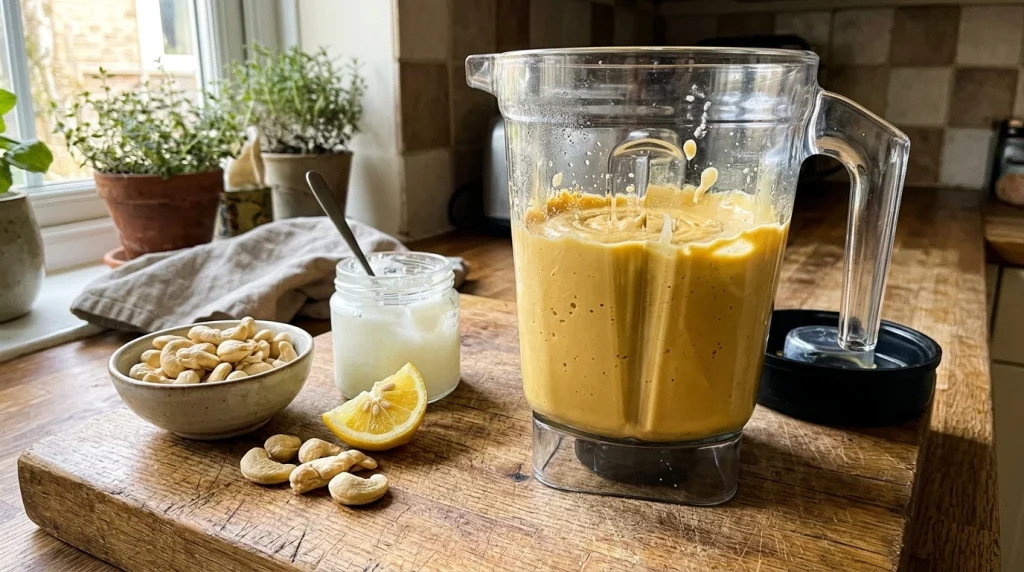
- Make the cashew cream base: In a high-speed blender jar, combine the soaked drained cashews, 1/3 cup filtered water, apple cider vinegar, nutritional yeast, salt, and turmeric. Blend on maximum speed for 60 to 90 seconds until a completely smooth, silk-like cream forms with zero graininess.
- Incorporate the fats and emulsifier: Pour the melted refined coconut oil, avocado oil, and liquid sunflower lecithin into the blender jar. Blend on medium-high speed for exactly 45 seconds. The mixture will transform into a thick, glossy, uniform emulsion resembling melted custard.
- Flash-chill emulsion: Immediately pour the warm emulsion into the prepared chilled metal bowl resting in the ice bath. Using a silicone spatula, stir constantly for 3 to 4 minutes as the mixture cools from liquid to a thick, opaque frosting consistency.
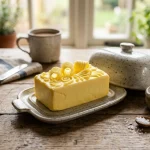
- Molding: Scrape the soft butter into silicone butter stick molds, a ceramic butter crock, or a parchment-lined glass container. Smooth the top with an offset spatula.
- Firming phase: Place the molds into the freezer for 45 minutes until rock solid. Once fully set, pop the butter sticks out of the molds and wrap them in wax paper or foil. Transfer to the refrigerator for everyday use.
Advanced Artisanal Culturing: The 24-Hour Fermentation Method
If you wish to elevate your homemade butter from a standard table spread into a gourmet, award-winning artisan block, incorporate live active fermentation rather than relying on vinegar for acidity:
- Inoculation: After blending the soaked cashews and water into a smooth cream, allow it to cool to 105°F (40°C). Stir in the contents of one capsule of live dairy-free probiotic powder (containing Lactobacillus plantarum or acidophilus) or 1 tablespoon of unsweetened plain non-dairy yogurt with live active cultures.
- Incubation: Cover the blender jar with a breathable cheesecloth secured with a rubber band. Place in a warm draft-free area (like an oven with only the interior light turned on, roughly 85°F to 90°F) for 18 to 24 hours.
- Flavor Development: As the bacteria metabolize the natural sugars in the cashews, they produce natural lactic acid, diacetyl, and complex aromas. The mixture will smell pleasantly tangy, fragrant, and unmistakably buttery.
- Completion: Proceed with adding the melted coconut oil, avocado oil, lecithin, and salt as directed in the master recipe.
Economic & Purity Analysis: Commercial vs. DIY Homestead Butter
| Comparison Factor | Store-Bought Artisan Butter (Miyoko’s) | Standard Grocery Margarine | Homemade Homestead Plant Butter |
|---|---|---|---|
| Average Cost per 8 oz | $6.99 – $8.49 | $1.89 – $2.50 | $1.65 – $2.10 |
| Preservatives / Additives | Cultured flavors, natural color | Potassium sorbate, EDTA, artificial flavor | Zero chemical preservatives; 100% whole foods |
| Packaging Waste | Plastic-lined foil + cardboard carton | Hard plastic tub and non-recyclable lid | Zero waste; reusable silicone molds & glass jars |
| Customization Flexibility | Fixed commercial salt levels | Fixed commercial formula | Fully customizable salt, herbs, smoke, and fat ratios |
Storage, Shelf Life & Freezing Guidelines
Because this homemade butter contains fresh whole-food cashew proteins and water, it requires proper refrigeration:
- Refrigerator (Daily Use): Store wrapped tightly in parchment or in an airtight butter dish for up to 3 weeks at 38°F (3°C).
- Freezer (Long-Term Storage): Wrap individual blocks in plastic wrap and store in a freezer container. Frozen plant butter retains peak flavor and structural emulsification for up to 6 months. Thaw in the refrigerator overnight before slicing.
Frequently Asked Questions About Making Plant-Based Butter
Why did my homemade butter separate into a grainy layer?
Separation happens when the emulsion cools too slowly, allowing the saturated coconut oil to crystalize away from the liquid oil. Always use an active ice bath and stir vigorously during the initial cooling phase, or blend the ingredients when the melted oil has cooled to lukewarm (around 85°F) rather than boiling hot.
Can I make this nut-free without cashews?
Yes. Replace the cashews and water with 1/3 cup of unsweetened organic soy milk or rich oat milk. Soy milk naturally contains high levels of lecithin and protein, yielding an exceptional nut-free butter emulsion.
Why do you specify refined coconut oil instead of virgin?
Unrefined virgin coconut oil smells and tastes strongly of tropical coconut, which will overpower savory dishes, garlic bread, or mashed potatoes. Refined coconut oil has been steam-deodorized, leaving it completely neutral in taste while retaining its firm melting characteristics.
Can I brown this homemade plant butter in a skillet?
Yes! Because this recipe contains real cashew solids, melting it gently in a pan over medium heat will toast the cashew proteins into delicious amber flecks that taste remarkably like traditional French browned butter (beurre noisette).
Get our latest guides, news, and insights highlighted in your Google Search & AI Overviews.