✨ This article was AI edited. Editorial responsibility: RecipesFromTheHomestead.com.
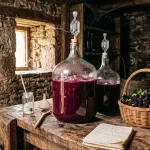
Every year, backyard gardens, local berry patches, and farmers markets overflow with seasonal harvests. Transforming that seasonal bounty into crisp, clear homemade wine is one of the most rewarding arts a homesteader or home hobbyist can master. With clean equipment, basic yeast science, and a little patience, anyone can produce crisp, aromatic table wines right in their own kitchen without expensive equipment.
The Fermentation Formula: The Biological Transformation
Winemaking is at its core a natural biochemical process. When Saccharomyces cerevisiae wine yeast is introduced into a nutrient-rich fruit liquid containing fermentable simple sugars (glucose and fructose), the yeast consumes the sugars to produce three outputs:
- Ethyl Alcohol (Ethanol): The active alcoholic compound that preserves the beverage and provides body.
- Carbon Dioxide (CO₂): Released vigorously as gas during active primary fermentation, forming a frothy fruit cap.
- Flavor Esters & Organic Acids: Volatile compounds that develop the intricate aromatic bouquet, fruit character, and complexity of finished wine.
The 5 Stages of Home Winemaking: A Complete Timeline
| Stage Number & Name | Duration | Primary Goal | Critical Success Factor |
|---|---|---|---|
| Stage 1: Must Prep & Sanitation | Day 1 (24 Hours) | Crush fruit, dissolve sugar, inhibit wild microbes | Campden tablet (sulfite) neutralizes wild bacteria before yeast pitch |
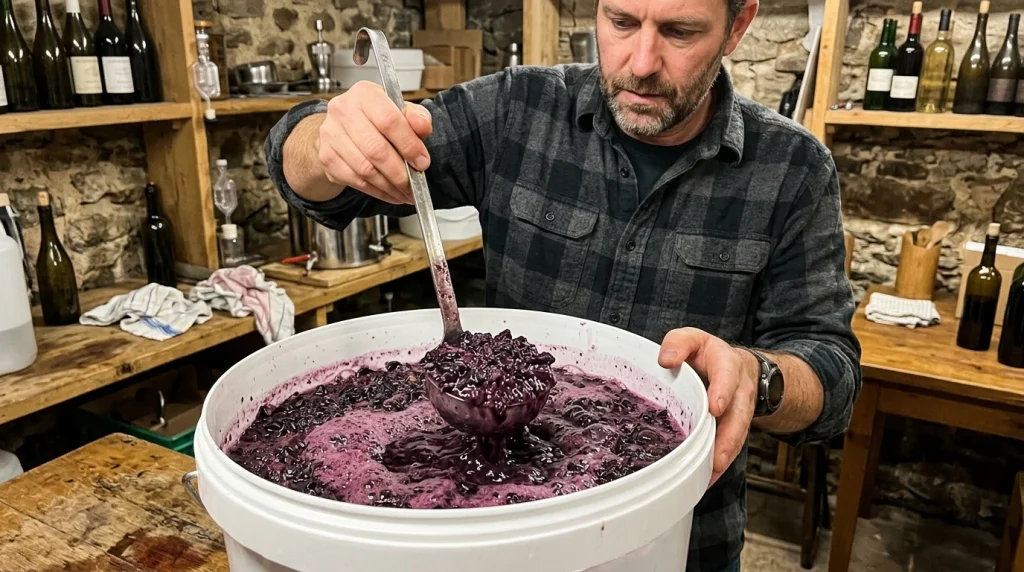
| Stage 2: Primary Fermentation | Days 2 – 7 | Rapid yeast reproduction and 70% sugar conversion | Twice-daily cap punch-downs prevent mold and extract rich fruit color |
| Stage 3: Secondary Anaerobic Racking | Weeks 2 – 8 | Slow sugar fermentation; sediment lees separation | Airlock must be tightly fitted to prevent oxygen spoilage (vinegar) |
| Stage 4: Fining & Clearing | Months 2 – 3 | Precipitate dead yeast cells and suspended proteins | Cool resting temperatures (60°F) accelerate crystal-clear brilliance |
| Stage 5: Bottling & Cellar Maturation | Months 3 – 12 | Stabilization, corking, bottle conditioning | Store bottles horizontally at 55°F to keep corks moist and tight |
Master Recipe: 1-Gallon Homestead Country Apple Wine
Crisp, golden, and refreshing, apple wine is one of the easiest beginner wines because pure apple cider has natural acidity and clear fermentable sugars.
Ingredients:
- 1 gallon (3.8L) 100% pure unpreserved apple cider or fresh pressed juice (no sorbate/benzoate)
- 1.5 lbs (680g) granulated pure cane sugar
- 1 packet (5g) Lalvin K1-V1116 or EC-1118 wine yeast
- 1 Campden tablet (potassium metabisulfite), crushed
- 1/2 teaspoon pectic enzyme (clears fruit haze)
- 1/2 teaspoon yeast nutrient (diammonium phosphate)
- 1/4 teaspoon acid blend (malic/tartaric acids)
- 1/4 teaspoon wine tannin (adds structure and crispness)
Step-by-Step Execution Guide:
- Sanitize all equipment: Soak your fermentation bucket, spoon, hydrometer, and airlock in no-rinse Star San solution for 2 minutes. Cleanliness prevents souring bacteria.
- Prepare the apple must: Pour 3 quarts of apple cider into the primary bucket. Warm the remaining quart in a pot and dissolve 1.5 lbs of cane sugar. Pour back into the bucket.
- Add nutrients and treat: Stir in the crushed Campden tablet, yeast nutrient, acid blend, and tannin. Measure specific gravity with your hydrometer; target 1.085 to 1.090 SG (predicts ~11.5% ABV). Cover loosely with a clean towel and let rest for 24 hours.
- Pitch the yeast: After 24 hours, stir in 1/2 teaspoon of pectic enzyme. Rehydrate the wine yeast in 2 oz warm water (100°F) for 15 minutes, then stir thoroughly into the must. Fit the lid with an airlock filled with sanitizer.
- Primary fermentation monitor: Store bucket at 68°F–72°F (20°C–22°C). Within 24–48 hours, bubbles will steadily vent through the airlock.
- Rack to secondary: On Day 7, take a hydrometer reading. When gravity falls below 1.015 SG, siphon the clear liquid into a sanitized 1-gallon glass jug (carboy). Top off with pure apple juice or water so headspace is under 2 inches. Secure the airlock.
- Bulk aging and clearing: Let the carboy rest in a cool, dark closet for 6 to 8 weeks. Dead yeast will settle into a white layer on the bottom. Siphon once more off the sediment into a clean carboy, add 1 crushed Campden tablet, and let age for 60 days.
- Bottling: When completely transparent, siphon into sanitized wine bottles and insert corks. Let bottles mature horizontally for at least 3 to 6 months before enjoying.
Top 4 Pitfalls to Avoid in Home Winemaking
- Using Preserved Juice: Store-bought juices containing potassium sorbate or sodium benzoate will inhibit yeast metabolism, resulting in a dead, unfermentable must. Always verify juice ingredients list only “apples” and “ascorbic acid” (vitamin C).
- Excess Headspace in Secondary: During secondary clearing, excessive air inside the carboy exposes wine to oxygen, triggering acetobacter bacteria that convert ethanol into vinegar. Keep liquid within 1 to 1.5 inches of the rubber stopper.
- Squeezing Fruit Bags: When lifting the fruit pulp bag out of the primary bucket, allow it to drain naturally. Forceful squeezing releases bitter seed tannins and astringent polyphenols that ruin wine balance.
- Skipping the Hydrometer: Guessing sugar levels leads to either weak, sour wine or harsh, fiery alcohol. A ten-dollar hydrometer provides precise scientific control over your entire process.
Frequently Asked Questions About Making Homemade Wine
How long does it take until homemade wine is ready to drink?
Light fruit wines (like berry or apple) can be bottled within 8 to 12 weeks and are enjoyable immediately, though they reach peak smoothness after 6 months of bottle conditioning. Heavy red grape wines benefit from 9 to 12 months of cellar aging before opening.
Can homemade wine make you sick or produce dangerous methanol?
No. Normal sugar-to-alcohol fruit fermentation produces ethanol, not toxic levels of methanol. Commercial distillation (liquor making) concentrates volatile heads if done improperly, but fermented table wines contain negligible trace amounts and cannot produce blindness or poisoning. Food-spoiling bacteria may turn wine into sour vinegar, but they cannot produce toxic pathogens due to the protective alcohol and acid barrier.
What is the easiest fruit for beginners to ferment into wine?
Blackberries, raspberries, concord grapes, and pure unpreserved apple cider are the easiest fruits for beginners because they possess balanced natural acid, ample natural sugars, and ferment vigorously with minimal intervention.
Do I need an expensive wine press to make wine from grapes?
Not for small homestead batches! For 1-gallon to 5-gallon batches, grapes can easily be crushed by hand inside a sanitized nylon straining bag or mashed with a clean kitchen potato masher inside your primary fermenter.
Get our latest guides, news, and insights highlighted in your Google Search & AI Overviews.