✨ This article was AI edited. Editorial responsibility: RecipesFromTheHomestead.com.
Produced with AI. This article was artificially generated. Editorial responsibility: RecipesFromTheHomestead.com.
For generations, the idea of butter alternatives conjured memories of yellow tubs of pale, oily margarine that tasted of chemical emulsifiers and left an unpleasant waxy film on the roof of your mouth. Modern food science and artisanal fermentation have fundamentally rewritten this reality. Today’s premium plant-based butters are engineered to match the melt point, aroma, and savory satisfaction of high-fat European butter. But how close do they truly get to real churned dairy?
The Flavor Spectrum: How Ingredients Dictate Taste
Unlike dairy butter—which comes from a single source (cow’s milkfat)—plant-based butter is an artisanal emulsion crafted from different botanical oils, nuts, and natural cultures. The primary fat source directly dictates the resulting sensory profile.
| Primary Lipid Base | Prominent Flavor Notes | Mouthfeel & Melt Rate | Best Culinary Application |
|---|---|---|---|
| Cultured Cashew & Coconut | Tangy, rich, subtly nutty, sweet cream finish | Identical to European butter; dissolves cleanly at 92°F | Raw spreading on artisan sourdough; laminated puff pastry |
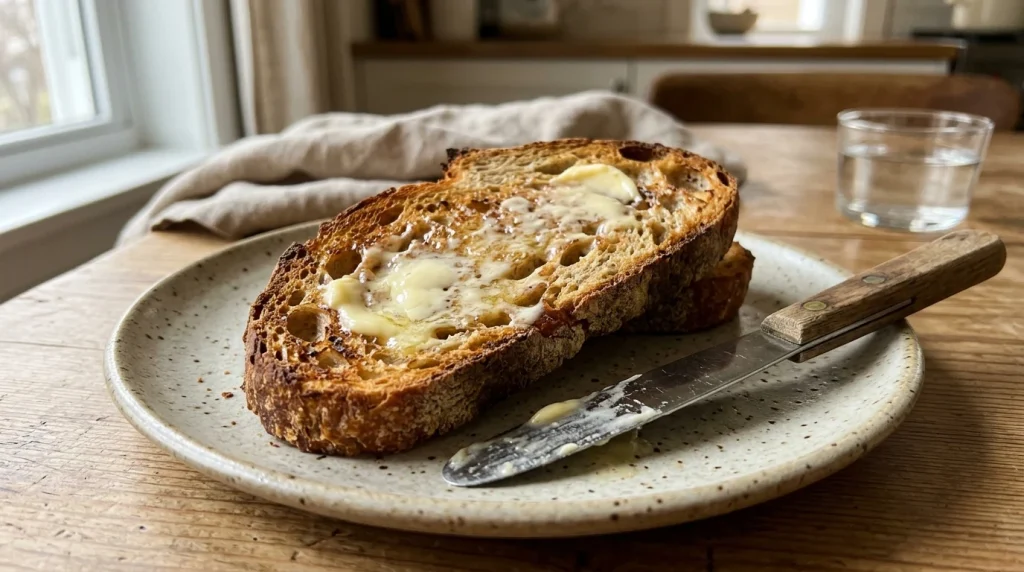
| Avocado & Olive Oil Blend | Earthy, mild grassy notes, clean savory body | Slightly softer; velvety and smooth | Sautéing vegetables, pan-searing mushrooms, warm toast |
| Refined Coconut & Sunflower | Neutral, clean, salted cream profile | Quick-melting; light on the tongue | Everyday sandwich spreading, cookie doughs, pie crusts |
| Standard Soy & Palm Margarine | Flat, synthetic, noticeable vegetable oil aftertaste | Greasy; leaves lingering waxy coating on palate | Commercial budget frying; not recommended for table use |
Mouthfeel, Melting Point, and Palate Coating
The true test of butter isn’t merely how it smells; it’s how it melts. Dairy butter contains a unique matrix of short- and medium-chain fatty acids that melt precisely between 90°F and 95°F (32°C–35°C). Because human body temperature is 98.6°F, dairy butter liquefies almost instantly on the tongue, creating that luxurious “melt-in-your-mouth” sensation.
Early margarines used long-chain hydrogenated trans fats with melting points exceeding 105°F. Because they didn’t fully melt at body temperature, they felt slick and greasy. High-end plant butters solve this by blending virgin coconut oil (which has a sharp, low melting point around 76°F) with neutral liquid oils, creating a thermodynamic melt curve that closely mimics churned dairy fat.
The Fermentation Factor: Why “Cultured” Butter Wins
If you taste plain uncultured sweet cream butter side-by-side with European cultured butter (like Kerrygold or French butter), the European butter exhibits a distinctive, craveable tang and depth. This flavor is produced by lactic acid bacteria generating diacetyl, the aromatic chemical compound responsible for that quintessential “buttery” scent.
Brands that incorporate genuine bacterial fermentation (such as culturing organic cashew milk or oat milk with live vegan cultures) produce a natural tang and lactic complexity that blind taste tests often struggle to differentiate from cow’s milk butter. In contrast, uncultured plant spreads rely on synthetic “natural flavors,” which can taste one-dimensional or perfumed.
Top Commercial Brands: Sensory Taste Test Comparison
1. Miyoko’s European Style Cultured Vegan Butter
- Flavor Profile: 9.5/10. The gold standard of plant-based butter. Made from cultured cashew milk and coconut oil, it features authentic lactic acidity, sweet cream aroma, and deep savory richness.
- Texture: Firm block form that slices like cold dairy butter and softens smoothly.
- Best For: Crusty bread, gourmet baking, and making dairy-free browned butter.
2. Country Crock Plant Butter (with Avocado or Olive Oil)
- Flavor Profile: 8.5/10. An extraordinarily convincing swap for standard American salted table butter (like Land O’Lakes). It offers a rich, familiar salted flavor with virtually zero perceptible coconut or avocado notes.
- Texture: Smooth, firm in stick format, creams easily with sugar.
- Best For: Everyday home baking, chocolate chip cookies, and mashed potatoes.
3. Flora Plant Butter
- Flavor Profile: 8.5/10. Certified non-GMO and palm-free, Flora delivers a surprisingly clean, sweet dairy-like flavor without greasy residue.
- Texture: High plasticity; excellent for pie crusts and puff pastry lamination.
- Best For: Pastry chefs and bakers seeking clean ingredient profiles.
4. Earth Balance Buttery Spread
- Flavor Profile: 6.5/10. While a historic pioneer in dairy-free living, Earth Balance carries a distinct, salty, vegetable-oil-forward flavor that tastes closer to traditional movie theater butter or diner margarine than fresh dairy butter.
- Texture: Very soft; melts quickly into a liquid puddle.
- Best For: Popcorn topping or casual cooking where nuanced butter flavor isn’t critical.
Homestead Flavor Test: Making Simple Garlic Herb Compound Butter
To evaluate the flavor transparency of your favorite plant butter, make this simple savory compound spread:
Ingredients:
- 1/2 cup (1 stick) unsalted block vegan butter, softened to room temperature
- 2 cloves fresh garlic, finely grated on a microplane
- 1 tablespoon finely chopped fresh flat-leaf parsley
- 1 teaspoon fresh thyme leaves
- 1/2 teaspoon flaky Maldon sea salt
- 1/4 teaspoon freshly cracked black pepper
Instructions:
Place the softened plant butter in a small bowl. Using a fork, mash and whip the butter with the grated garlic, chopped herbs, sea salt, and black pepper until completely combined. Spoon onto a sheet of parchment paper, roll into a tight cylinder, and twist the ends. Refrigerate for 45 minutes until firm. Slice into rounds over grilled sweet corn, baked potatoes, or toasted baguettes.
Frequently Asked Questions About Plant-Based Butter Taste
Does plant-based butter taste like coconut?
No, high-quality plant-based butters use refined coconut oil (or “steam-deodorized” oil), which has all coconut aromas, flavors, and allergens completely removed. Unless a brand explicitly states it uses “unrefined virgin coconut oil,” it will not taste or smell like coconut.
Can non-vegans tell the difference?
In baked goods, sauces, and cooked dishes, over 90% of consumers cannot distinguish high-quality plant butter from dairy butter. When eaten raw on plain toast, cultured cashew varieties fool even seasoned butter enthusiasts, while lower-end spreads may be identified by their lighter body.
Does plant butter melt the same way in a hot pan?
Yes. Block plant butters melt smoothly and sizzle just like dairy butter. However, because most plant butters contain less water than margarine and fewer milk proteins than dairy, they spatter less and have a slightly higher smoke point, making them excellent for searing.
Is plant butter healthier than dairy butter?
Nutritionally, plant butter has comparable total calories and fat (around 100 calories and 11g fat per tablespoon), but contains zero dietary cholesterol and significantly less saturated fat (especially blends made with avocado or olive oil). They provide an ideal cardiovascular choice for those monitoring cholesterol.
Get our latest guides, news, and insights highlighted in your Google Search & AI Overviews.