✨ This article was AI edited. Editorial responsibility: RecipesFromTheHomestead.com.
Produced with AI. This article was artificially generated. Editorial responsibility: RecipesFromTheHomestead.com.
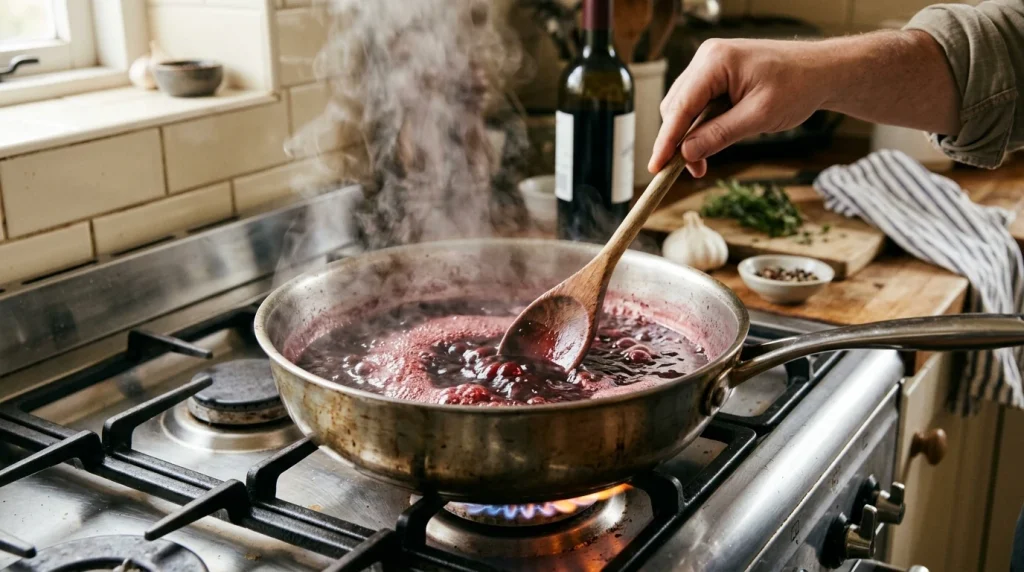
How long to reduce wine by half typically takes 10 to 15 minutes for 1 cup of wine simmered in a standard 10-inch skillet over medium heat. Timing depends primarily on pan surface area, volume, and simmer temperature: a wide skillet reduces liquid twice as fast as a narrow, tall saucepan.
The Culinary Mechanics of Wine Reduction
In classical gastronomy, reducing wine is not merely boiling off liquid—it is a transformative biochemical concentration. As liquid simmers gently over heat, ethanol (which evaporates at 173°F / 78°C) and water molecules vaporize into steam. Left behind is a concentrated matrix of organic acids (tartaric, malic, and lactic), natural fruit sugars, phenolic compounds, and complex flavor esters.
However, reduction is an unforgiving process. Just as pleasant fruit flavors become four times as concentrated, so do harsh tannins and sharp acidity. Understanding the precise timing and thermal control required to reduce wine by half (“au demi”) separates a glossy, luxurious restaurant-grade pan sauce from an astringent, sour glaze.
Reduction Timing Matrix: Cookware Diameter vs. Liquid Volume
The single greatest factor governing reduction speed is evaporative surface area. A cup of liquid sitting in a wide sauté pan exposes quadruple the surface surface to dry air compared to the same volume in a tall, narrow soup pot. Reference the practical kitchen benchmarks below:
| Wine Starting Volume | Cookware Type & Diameter | Burner Heat Setting | Time to Reduce by Half (50%) | Time to Reduce “Sec” (Glaze / 85%) |
|---|---|---|---|---|
| 1/2 Cup (120 ml) | 10-Inch Stainless Skillet | Medium (gentle simmer) | 4–6 minutes | 7–9 minutes |
| 1 Cup (240 ml) | 10-Inch Sauté Pan | Medium (steady bubbles) | 10–12 minutes | 14–16 minutes |
| 1 Cup (240 ml) | 2-Quart Narrow Saucepan (6-inch) | Medium-Low | 18–22 minutes | 25–28 minutes |
| 1 Bottle / 750 ml | 12-Inch Wide Braiser / Dutch Oven | Medium | 25–32 minutes | 38–45 minutes |
| 1 Bottle / 750 ml | 4-Quart Stockpot (tall) | Medium | 45–55 minutes | 60–75 minutes |
Gentle Simmer vs. Rolling Boil: Why Thermal Control Matters
A common rookie mistake is cranking the stovetop burner to maximum heat in an effort to accelerate evaporation. Rapid, violent boiling is disastrous for wine reductions for three chemical reasons:
- Thermal Degradation of Volatile Aromatics: Delicate floral, berry, and herbal aromatics possess low boiling thresholds. Hard boiling drives these nuanced aromas straight into your kitchen exhaust fan, leaving a one-dimensional, flat syrup behind.
- Premature Sugar Caramelization and Scorching: High heat scorches the unfermented fructose and glucose along the thin edges of the reduction line, producing uncorrectable acrid and bitter burnt notes.
- Tannin Harshness: Intense heat bonds polyphenols into rough molecular chains. A steady, gentle simmer—where small, lazy bubbles break across the liquid surface—preserves softness while permitting controlled evaporation.
Visual and Tactile Indicators: How to Tell When It’s Cut in Half
You do not need to pour hot bubbling wine into a measuring cup to determine whether you have achieved a 50% reduction. Professional cooks utilize three visual cues:
- The Tide Mark (Ring Line): When you first pour wine into the warm pan, observe where the surface touches the metal sides. As the liquid vaporizes, a faint ring will mark the starting perimeter. When the liquid rests halfway down this original mark, you have reached 50%.
- Bubble Viscosity: Initial wine simmers with thin, watery bubbles that burst instantaneously. As alcohol and water dissipate and sugar/tannin density increases, bubbles become glossy, slightly syrupy, and pop with a slower rhythm.
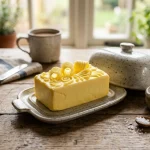
- Nappe Coating: Dip the back of a stainless steel spoon into the reduction. At half volume, the liquid will thinly coat the metal without immediately sheeting off like tap water. If you make classic emulsions, pairing reduced wine with dairy is an art form; explore our master recipe for classic French butter sauce beurre blanc for inspiration.
The Master Pan Reduction Sauce Method
Here is how to apply this technique directly after searing steak, duck breasts, or roasted pork chops:
- Deglaze the Fond: Remove the cooked meat to rest on a warm carving board. Pour off excess rendered grease, leaving roughly one tablespoon of cooking fat and all the browned flavor bits (fond) stuck to the bottom of the pan.
- Sauté Aromatics: Add one minced French shallot and a fresh sprig of thyme over medium heat for 60 seconds until fragrant.
- Add the Wine: Pour in 1 cup of dry red wine (such as Cabernet Sauvignon or Pinot Noir). Use a wooden spoon to scrape the browned fond into the bubbling wine.
- Simmer to Half: Allow the wine to simmer steadily for 8 to 11 minutes until reduced by half (leaving 1/2 cup of concentrated liquid).
- Mount with Butter (Monter au Beurre): Remove the pan from direct heat. Vigorously whisk in 3 tablespoons of ice-cold cubed unsalted butter, one piece at a time. The cold butter emulsifies with the wine’s natural acid, yielding a mirror-gloss, velvety sauce.
Chef Troubleshooting Guide: Rescuing Over-Reduced Wine
If distraction strikes and your reduction reduces too far, apply these instant kitchen fixes:
- Too Sour or Sharp: Excessive concentration multiplies acidity. Whisk in 1 to 2 tablespoons of rich homemade beef or chicken stock, a splash of heavy cream, or a half-teaspoon of pure maple syrup to balance pH perception.
- Over-Thickened or Syrupy: Splash in 2 tablespoons of warm water or unsalted broth off the heat to thin the reduction back to silky sauce consistency.
- Burnt or Scorched Bottom: If the sugars burned along the bottom of the pan, do not scrape the bottom. Carefully pour the unburned top layer into a clean pan. If any acrid aroma has permeated the sauce, discard and begin again.
Get our latest guides, news, and insights highlighted in your Google Search & AI Overviews.