✨ This article was AI edited. Editorial responsibility: RecipesFromTheHomestead.com.
Produced with AI. This article was artificially generated. Editorial responsibility: RecipesFromTheHomestead.com.
Transitioning to dairy-free baking once meant accepting dense cakes, greasy cookies, or cardboard pie crusts. Today’s modern plant-based butter formulations have revolutionized homestead pastry craft. Whether you are baking for dietary restrictions, ethical choices, or simply experimenting with culinary alternatives, understanding how vegan butter interacts with flour, starches, and sugar is the key to bakery-quality results.
Fat Chemistry: Plant Butter vs. Traditional Dairy Butter
In traditional baking, butter is not merely a flavor agent; it is an active mechanical ingredient. Dairy butter is an emulsion of roughly 80% to 82% milkfat, 16% to 18% water, and 1% to 2% milk solids. Plant-based butters replicate this structure using emulsions of coconut, avocado, sunflower, or palm oils stabilized with plant lecithin.
| Parameter | Standard Dairy Butter | Block Plant Butter (Miyoko’s / Flora) | Tub Margarine / Spreads |
|---|---|---|---|
| Fat Content | 80% – 82% butterfat | 78% – 82% refined vegetable oils | 50% – 65% water-heavy emulsion |
| Melting Range | 90°F – 95°F (32°C – 35°C) | 82°F – 88°F (28°C – 31°C) | 65°F – 75°F (melts rapidly at room temp) |
| Browning (Maillard) | Milk proteins brown into nutty browned butter | Requires cultured cashew or oat proteins to brown | Cannot brown; burns or spatters violently |
| Baking Suitability | Universal benchmark | Excellent: 1:1 replacement in pastries, crusts, cookies | Poor: causes puddling, cookie spreading, sogginess |
The Golden Rule: Block Butter vs. Tub Margarine
The single most common mistake home bakers make is scooping soft margarine from a plastic tub. Tub spreads are whipped with excess water and air to ensure easy spreading directly from the refrigerator. When introduced to an oven, this excess water rapidly turns to steam, evaporating and leaving your baked goods dry, flat, and greasy.
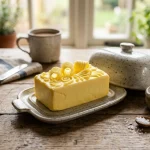
Always choose block or stick vegan butter wrapped in foil or parchment. Look for brands that clearly list a minimum of 78% fat on the nutritional panel. Reliable high-performance commercial options include Miyoko’s European Style Cultured Vegan Butter, Flora Plant Butter, Country Crock Plant Butter Sticks, and Naturli’ Organic Vegan Block.
Technique Breakdown: Mastering Key Baking Methods
1. Creaming Method (Cakes, Cookies, Quick Breads)
Creaming aerates fat by trapping micro-bubbles around jagged sugar crystals. Because plant butters soften faster than dairy, start with butter straight from the fridge cut into 1/2-inch cubes. Beat with granulated sugar for 3 to 4 minutes on medium speed. The mixture should become pale ivory and fluffy without showing signs of separation or liquid pooling.
2. Cutting-In for Laminated Pastry (Pies, Scones, Biscuits)
To produce flaky, distinct layers, solid fat must remain cold enough to hold its shape until heat hits the oven, where expanding trapped water creates steam pockets that lift the dough. Follow these protocols when using plant butter:
- Grate frozen plant butter sticks using the large holes of a box grater directly into your chilled dry flour mixture.
- Freeze the grater and flour bowl for 15 minutes prior to working.
- Work quickly with a pastry blender or fingertips to coat every butter shred with flour.
- Chill the shaped pie crust or scones in the freezer for 20 minutes immediately before placing them into a preheated 425°F (220°C) oven.
3. Can You Make “Browned” Vegan Butter?
Traditional brown butter (beurre noisette) relies on the caramelization of dairy whey proteins. Most vegetable oil sticks lack these proteins and will simply sizzle and burn. However, vegan butters formulated with cultured cashew milk or legume protein (such as Miyoko’s) can be gently browned. Melt over low-medium heat in a light-colored stainless skillet, swirling constantly until fine amber flecks form and release a toasted hazelnut aroma (about 4 to 6 minutes).
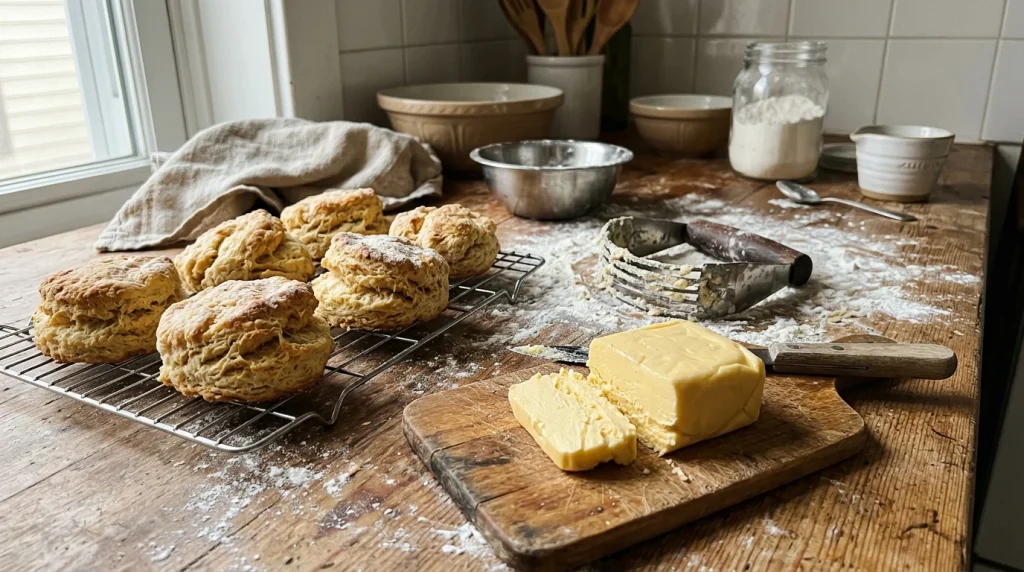
Step-by-Step Recipe: Ultra-Flaky Homestyle Vegan Biscuits
This master recipe proves that plant-based butter can yield towering, peel-apart laminated biscuits with golden crusts.
Ingredients:
- 2.5 cups (300g) unbleached all-purpose flour
- 1 tablespoon aluminum-free baking powder
- 1/2 teaspoon baking soda
- 1 teaspoon fine sea salt
- 1/2 cup (113g / 1 stick) cold unsalted block vegan butter, frozen
- 1 cup (240ml) cold unsweetened soy milk or almond milk
- 1 tablespoon raw apple cider vinegar (to create vegan buttermilk)
- 2 tablespoons melted plant butter for brushing tops
Methodology:
- Form buttermilk: Whisk apple cider vinegar into cold soy milk. Allow to curdle for 5 minutes.
- Dry blend: Whisk flour, baking powder, baking soda, and salt in a chilled stainless steel bowl.
- Grate butter: Grate the frozen stick of plant butter directly into the flour. Toss lightly with a fork until coated.
- Hydrate: Pour the chilled vegan buttermilk into the center. Stir gently with a wooden spoon just until a shaggy dough forms. Do not knead aggressively.
- Letter-fold lamination: Turn dough out onto a lightly floured surface. Pat into a 3/4-inch rectangle. Fold into thirds like a business letter. Rotate 90 degrees and repeat the fold twice more. This creates dozens of distinct buttery layers.
- Cut: Pat dough to 1-inch thickness. Cut into rounds with a sharp 2.5-inch biscuit cutter pressed straight down without twisting.
- Bake: Arrange biscuits touching each other on a parchment-lined baking sheet. Brush tops with melted plant butter. Bake at 425°F (220°C) for 14 to 16 minutes until golden brown and towering.
Frequently Asked Questions About Baking with Vegan Butter
Does vegan butter change the baking time or temperature?
In general, bake times and oven temperatures remain identical. However, because plant-based baked goods can take slightly longer to develop golden surface color, check for doneness using a toothpick or internal thermometer rather than visual color alone.
Why did my cookies spread too thin with plant butter?
Excessive spreading happens when plant butter becomes too warm during dough mixing. Counteract spreading by chilling shaped cookie dough balls in the refrigerator for at least 60 to 90 minutes before baking.
Can I substitute coconut oil directly for vegan butter?
Pure coconut oil is 100% fat with zero water content, whereas vegan butter is 80% fat and 20% water. Substituting coconut oil 1:1 will make baked goods greasy and dry. If using coconut oil, reduce the amount by 20% and add 1 tablespoon of water or plant milk per half-cup of fat.
Is salted or unsalted plant butter better for baking?
Unsalted block butter is strongly recommended. Sodium levels vary wildly between plant butter brands (from 90mg to 250mg per tablespoon). Using unsalted allows you to maintain exact control over your dough’s salt balance.
Get our latest guides, news, and insights highlighted in your Google Search & AI Overviews.