✨ This article was AI edited. Editorial responsibility: RecipesFromTheHomestead.com.
Produced with AI. This article was artificially generated. Editorial responsibility: RecipesFromTheHomestead.com.
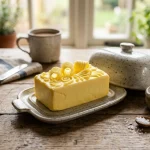
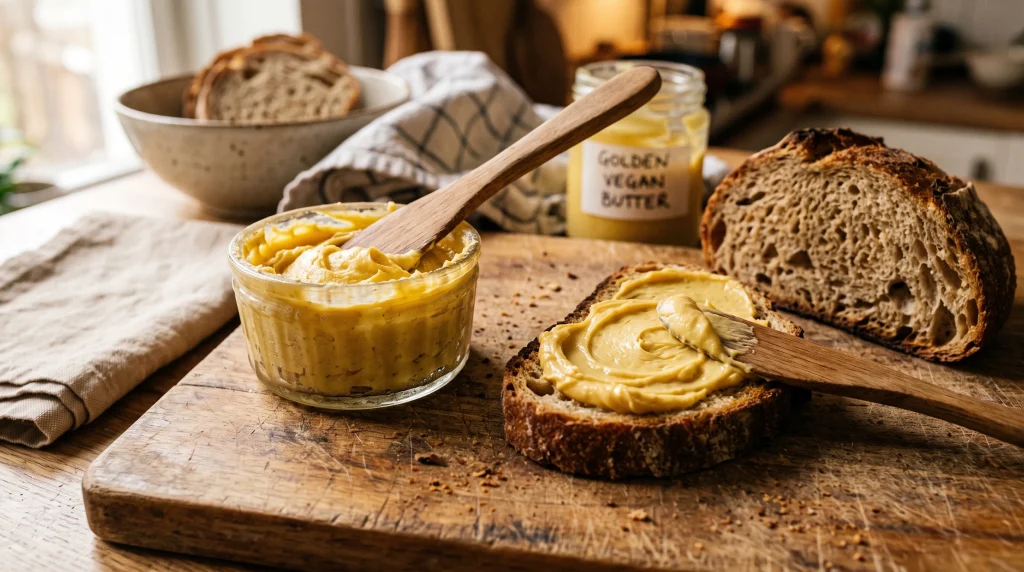
Smooth and creamy vegan butter for spreading is an emulsified plant-based fat composition formulated with refined coconut oil, neutral liquid oils, unsweetened cultured plant milk, sunflower lecithin, and nutritional acidulants to replicate the exact melting curve, plastic spreadability, and rich dairy flavor profile of traditional cultured churned dairy butter.
For individuals following plant-based lifestyles, managing lactose intolerance, or simply pursuing artisanal homestead cooking, store-bought vegan margarine spreads often disappoint. Many commercial tubs rely on hydrogenated palm oils, artificial yellow dyes, and chemical preservatives that leave an oily, waxy film on the tongue. Creating your own cultured vegan butter at home gives you complete command over lipid quality, salt balance, and melting characteristics. The result is a golden, luxurious spread that melts cleanly across warm sourdough toast, creams beautifully into cookie doughs, and browns delicately in a hot skillet.
The Physics of Plant-Based Butter Emulsification
Traditional dairy butter is a water-in-oil emulsion comprising roughly 80–82% butterfat, 16–17% water, and 1–2% milk solids. Replicating this behavior with plant ingredients requires balancing three thermodynamic factors:
- The Saturated Solid Fat Matrix (50–55%): Refined deodorized coconut oil provides the necessary saturated fatty acids (predominantly lauric acid) that keep the butter firm at refrigerator temperature (38°F / 3°C) while melting sharply at human body temperature (98.6°F / 37°C), avoiding any lingering greasiness.
- The Monounsaturated Liquid Lipid (25–30%): Cold-pressed extra virgin olive oil, avocado oil, or high-oleic sunflower oil lowers the overall melting point, granting the butter its signature smooth spreadability straight from the refrigerator without tearing soft bread.
- The Aqueous Phase & Natural Emulsifier (15–20%): Soy milk contains high concentrations of natural plant proteins (glycinin and conglycinin) that mirror bovine casein. Paired with liquid sunflower lecithin (an amphiphilic phospholipid), it permanently binds the water droplets inside the lipid network, preventing water separation during freezing or thawing.
- Lactic Acid Culture Notes: Real churned butter develops complex floral, nutty diacetyl aromatics through lactic acid bacterial fermentation. Incorporating raw apple cider vinegar and nutritional yeast replicates authentic European cultured butter bouquet.
Ingredient & Performance Comparison: Homemade Vegan Butter vs. Competitors
| Butter Formulation | Primary Lipid Base | Emulsification Stability | Spreadability Straight from Fridge | Baking & Lamination Suitability |
|---|---|---|---|---|
| Artisanal Homemade Cultured Vegan Butter | Refined coconut oil & avocado oil | High (sunflower lecithin & soy protein) | Excellent (smooth, non-tearing) | Superior (1:1 dairy replacement) |
| Commercial Tub Margarine | Palm oil blend & water | Moderate (synthetic mono-glycerides) | Excessively soft / watery | Poor (high water causes flat cookies) |
| Pure Coconut Oil | 100% coconut fat | None (zero water emulsion) | Brittle and rock-hard cold | Greasy (lacks moisture for steam rise) |
| Cultured European Dairy Butter | Bovine milkfat (82%) | Natural milk casein membrane | Firm cold, softens in 10 minutes | Benchmark standard |
Master Blueprint: 10-Minute Cultured Spreadable Vegan Butter
This master recipe produces two standard 4-ounce butter sticks (or one 8-ounce ceramic crock of spread). It sets in under an hour and functions as a seamless 1:1 substitute in all baking, sautéing, and spreading applications.
Ingredients Formulation
- Refined Coconut Oil (Melted & Cooled): 1 cup (220g), must be labeled ‘refined’ to ensure zero coconut scent or flavor.
- Cold-Pressed Avocado Oil (or Neutral Olive Oil): 0.25 cup (60ml), provides golden color and refrigerator plasticity.
- Unsweetened Organic Soy Milk: 0.33 cup (80ml), room temperature (crucial: avoid almond or oat milk as their lower protein content fails to emulsify reliably).
- Liquid Sunflower Lecithin: 1 teaspoon (5ml), the vital non-GMO amphiphilic binder.
- Raw Apple Cider Vinegar: 1 teaspoon (5ml), curdles the soy proteins into cultured lactic notes.
- Nutritional Yeast Flakes: 0.25 teaspoon (finely ground), delivers subtle cheesy diacetyl depth.
- Fine Sea Salt: 0.5 teaspoon (adjust to 0.75 tsp if salted butter is preferred).
- Ground Turmeric: 1 tiny pinch (optional, for authentic pale churned yellow hue).
Step-by-Step Technical Protocol
- Curdle the Soy Milk: In a small glass measuring cup, combine the room-temperature soy milk and apple cider vinegar. Stir gently with a fork and let rest undisturbed for 5 minutes. The acid immediately reacts with the soy proteins, curdling the liquid into a thick, tangy vegan buttermilk.
- Combine in High-Speed Blender: Pour the curdled soy milk into the blender cup. Add the liquid sunflower lecithin, fine sea salt, nutritional yeast, and turmeric pinch. Pulse on low speed for 15 seconds to dissolve the salt and distribute the emulsifier.
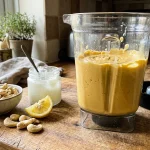
- Stream in the Lipids: With the blender running on low speed, slowly stream in the melted refined coconut oil and avocado oil. Once all oil is added, increase blender speed to high and process for 45 to 60 seconds. The vortex will transform the golden liquid into a thick, glossy, pale-yellow cream resembling warm hollandaise.
- Pour into Molds: Immediately pour the emulsified liquid into silicone butter stick molds, a ceramic butter crock, or a parchment-lined glass container. Work quickly, as the lecithin will begin thickening as the mixture contacts cooler air.
- Flash-Chill to Lock Emulsion: Place the molds immediately into the freezer for 35 to 45 minutes until completely solid to the touch. Flash-chilling ensures the coconut fat crystals form small, uniform beta-prime crystals, guaranteeing a silky-smooth mouthfeel rather than a grainy texture.
- Unmold and Store: Pop the butter sticks out of the silicone molds and wrap them in unbleached parchment paper. Store in the refrigerator for immediate daily spreading, or keep backup sticks wrapped in freezer bags for long-term storage.
Culinary Applications: Spreading, Sautéing, and Baking
This formulation excels across the entire culinary spectrum:
- Table Spreading: Because the avocado oil softens the rigid coconut lattice, this butter spreads effortlessly on crusty baguettes, flaky biscuits, and tender pancakes directly from the refrigerator without tearing the crumb.
- Pan Sautéing: The smoke point reaches approximately 375°F (190°C), making it ideal for scrambling tofu, pan-frying vegetables, or tossing with freshly boiled pasta and garlic.
- Baking Lamination: When cold, this butter can be grated on a box grater into flour for flaky scones, pie crusts, and American-style biscuits, creating clean steam pockets during baking just like premium dairy butter.
Pair this spread with our homemade soft bakery butter bread loaves or explore our savory buttery homemade wraps.
Frequently Asked Questions About Homemade Vegan Butter
Can I use virgin unrefined coconut oil instead of refined?
You can, but the finished butter will carry a strong, pronounced coconut aroma and flavor. Refined coconut oil undergoes physical steam deodorization, yielding a 100% neutral fat that lets the savory cultured butter flavors shine through cleanly.
Why is sunflower lecithin necessary in homemade vegan butter?
Lecithin is a natural phospholipid that acts as a bridge between water and fat molecules. Without lecithin, your butter will weep water droplets upon melting and will separate into greasy oil and curdled water when used in hot pan cooking or baking.
How long does homemade vegan butter keep in the refrigerator?
Wrapped in parchment paper inside an airtight container, homemade vegan butter stays fresh in the refrigerator for up to 3 weeks. You can also freeze wrapped sticks for up to 6 months with zero loss of flavor or emulsion integrity.
Get our latest guides, news, and insights highlighted in your Google Search & AI Overviews.