✨ This article was AI edited. Editorial responsibility: RecipesFromTheHomestead.com.
Produced with AI. This article was artificially generated. Editorial responsibility: RecipesFromTheHomestead.com.
There is an unmatched satisfaction in uncorking a bottle of vibrant, fragrant homemade wine that originated from your own homestead garden, local orchard, or fresh grape juice. For millennia, smallholders and home vintners have turned seasonal fruit abundance into shelf-stable, complex wines without industrial equipment or synthetic additives. Modern home winemaking combines this age-old tradition with simple scientific sanitation principles to produce clean, competition-grade vintages on a kitchen table.
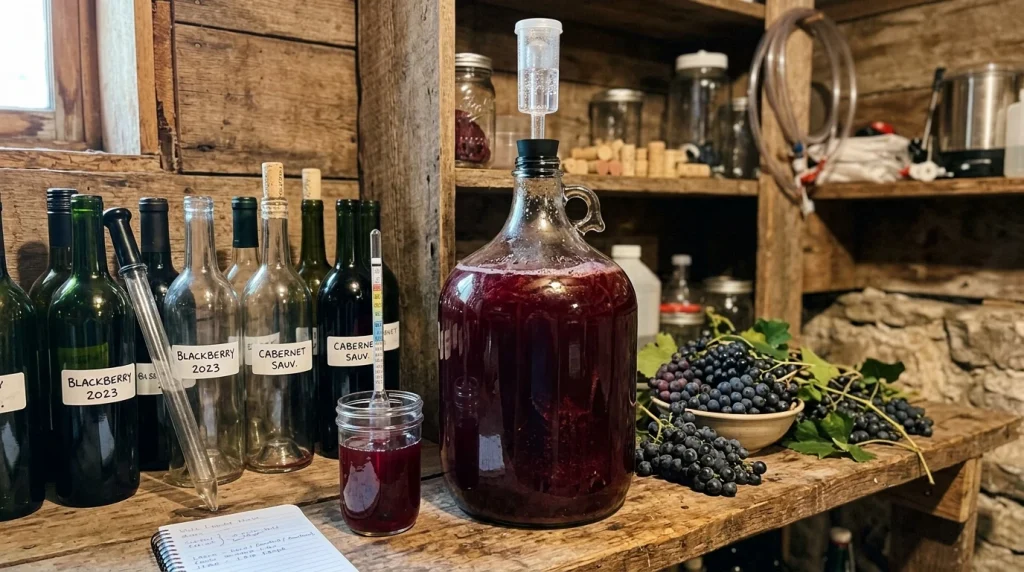
Essential Equipment for a 1-Gallon Starter Batch
You do not need an oak barrel cellar to begin crafting extraordinary wines. A basic 1-gallon (3.8L) glass setup yields approximately 5 standard 750ml bottles, allowing you to experiment with different fruit profiles at negligible cost.
| Tool / Equipment | Primary Function | Essential Specifications |
|---|---|---|
| Primary Fermentation Bucket | Allows vigorous initial aerobic yeast expansion | 2-gallon food-grade HDPE with airtight lid & grommet |
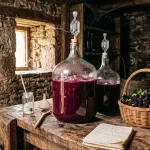
| Secondary Glass Carboy (Demijohn) | Restricts oxygen exposure during long anaerobic clearing | 1-gallon clear glass jug with narrow neck |
| Three-Piece Airlock & Rubber Bung | Vents fermentation CO₂ while blocking wild airborne bacteria | #6 or #6.5 drilled silicone bung with water airlock |
| Triple-Scale Brewing Hydrometer | Measures specific gravity, sugar content & final ABV% | Specific gravity scale 0.990 to 1.120 with test jar |
| Auto-Siphon & Food-Grade Tubing | Racks (transfers) clear wine off spent yeast sediment (lees) | 3/8-inch mini auto-siphon with 5 feet of vinyl tubing |
| Sanitizer Solution | Kills wild microbes and mold spores on all surfaces | No-rinse Star San or sodium metabisulfite |
Core Winemaking Chemistry: The 4 Golden Parameters
Consistently delicious homemade wine depends on managing four foundational chemical factors before pitching your yeast culture:
- Specific Gravity & Potential Alcohol (1.080 – 1.095 SG): Testing your initial “must” (unfermented fruit juice) with a hydrometer determines available sugars. An initial gravity of 1.085 will yield a balanced wine around 11.5% to 12% ABV. If gravity is low, add granulated cane sugar; if too high, dilute with pure spring water.
- Acid Balance (Titratable Acidity 0.60% – 0.75%): Acidity gives wine crispness, prevents oxidation, and protects against spoilage organisms. Native fruit wines (like blackberry or peach) often require a pinch of acid blend (tartaric, malic, and citric acids).
- Tannin Structure: Tannins derived from grape skins, elderberries, or powdered wine tannin contribute astringency, body, and color stabilization, preventing thin, watery mouthfeel.
- Yeast Nutrients (DAP & Amino Acids): Unlike beer wort or honey must, pure fruit juice can be deficient in free amino nitrogen. Supplementing with 1/2 teaspoon of yeast nutrient prevents sulfur “rotten egg” odors during primary fermentation.
Master Recipe: 1-Gallon Homestead Blackberry & Concord Wine
This recipe balances rich dark fruit flavors, natural tannins, and crisp acidity for an approachable, full-bodied table wine.
Ingredients:
- 4 lbs (1.8kg) fresh or frozen wild blackberries (or dark seedless grapes)
- 2 lbs (900g) granulated pure cane sugar
- 1 gallon (3.8L) pure chlorine-free spring water
- 1 packet (5g) Lalvin EC-1118 or Red Star Premier Rouge wine yeast
- 1 Campden tablet (potassium metabisulfite), finely crushed
- 1/2 teaspoon pectic enzyme powder
- 1/2 teaspoon yeast nutrient
- 1/4 teaspoon grape tannin powder
- 1/2 teaspoon acid blend
Step-by-Step Production Process:
Phase 1: Must Preparation & Sterilization (Day 1)
- Sanitize Everything: Thoroughly soak all buckets, spoons, and tools in no-rinse Star San solution. Sanitation is 90% of winemaking success.
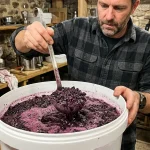
- Fruit Mashing: Place thawed blackberries in a sanitized nylon mesh straining bag inside your primary bucket. Crush the berries thoroughly with clean hands or a sanitized potato masher to release the juice.
- Sugar Dissolution: Dissolve 2 lbs of sugar in 3 quarts of warm spring water. Pour over the fruit bag. Add spring water until total volume reaches 1 gallon.
- Inhibit Wild Yeast: Stir in the crushed Campden tablet, yeast nutrient, acid blend, and tannin. Cover the bucket with a clean towel. Wait 24 hours. The Campden tablet releases sulfur dioxide gas, eliminating wild wild mold and bacteria without harming subsequent cultured yeast.
Phase 2: Yeast Inoculation & Primary Fermentation (Days 2–7)
- Enzyme Addition: Stir in 1/2 teaspoon of pectic enzyme. Pectic enzyme breaks down cellular fruit pectin, increasing juice yield and ensuring crystal-clear finished wine.
- Pitching the Yeast: Rehydrate your wine yeast in 2 oz of 100°F (38°C) water for 15 minutes. Pour over the must. Seal the bucket lid fitted with a water airlock.
- Daily Punch-Downs: Store the bucket in a dark, warm location (68°F–75°F / 20°C–24°C). Within 24 hours, vigorous fermentation will push a fruit “cap” to the surface. Twice daily, open the bucket and gently submerge the fruit bag with a sanitized spoon to extract color, tannins, and prevent mold growth.
Phase 3: Racking to Secondary Carboy (Day 7–10)
- Hydrometer Check: When hydrometer readings drop below 1.010 SG, primary fermentation is winding down.
- Fruit Extraction: Remove the nylon fruit bag, allowing juice to drain without squeezing excessively (squeezing extracts bitter seed oils).
- Racking: Using your sanitized auto-siphon, transfer the liquid into a 1-gallon glass carboy, leaving the thick bottom sediment behind. Top up with a splash of spring water or concord grape juice so the liquid reaches within 1.5 inches of the stopper. Fit the airlock.
Phase 4: Anaerobic Clearing & Aging (Month 1 to Month 3)
Place the glass carboy in a cool, dark closet (60°F–65°F / 15°C–18°C). Over the next 6 to 8 weeks, secondary fermentation will complete, and suspended yeast cells will drop out of suspension, forming a dense layer of lees at the bottom. Once clear, rack the wine into a clean carboy, add 1 crushed Campden tablet to prevent oxidation, and allow it to bulk-age for an additional 60 days.
Wine Troubleshooting Guide
| Symptom | Probable Root Cause | Correction Protocol |
|---|---|---|
| Rotten egg / sulfur aroma | Stressed yeast lacking available nitrogen | Add 1/4 tsp yeast nutrient; aerate gently with sanitized rod |
| Cloudy / hazy wine after 3 months | Unbroken pectin chains or suspended proteins | Add 1/2 tsp pectic enzyme or bentonite clay fining agent |
| Stuck fermentation (SG > 1.030) | Low ambient temperature (<60°F) or low pH | Warm carboy to 72°F; gently swirl yeast lees into suspension |
| Vinegar / sour taste | Acetobacter infection from excessive oxygen contact | Keep airlocks filled; sanitize rigorously; avoid headroom air |
Bottling, Corking, and Cellar Maturation
Once your wine is brilliantly clear and stable with zero hydrometer change over 3 weeks (SG reading 0.992–0.996), siphon the finished wine into sanitized glass wine bottles. Insert clean #8 or #9 agglomerated wine corks using a double-lever hand corker. Store bottles horizontally in a dark cellar at 55°F (13°C). While delicious at bottling, your homemade vintage will reach peak smoothness and aromatic complexity between 6 and 12 months of bottle aging.
Frequently Asked Questions About Making Wine at Home
Can I make wine from 100% store-bought juice?
Yes, as long as the store juice contains no chemical preservatives such as potassium sorbate, sodium benzoate, or sodium metabisulfite, which inhibit yeast reproduction. Pastuerized 100% grape, apple, or berry juices with added ascorbic acid (vitamin C) ferment beautifully.
Can I use standard baker’s bread yeast for making wine?
While bread yeast will ferment sugar into alcohol, it has low alcohol tolerance (max 6–8% ABV), settles poorly, and imparts a distinct bready, yeasty aftertaste. Cultured wine yeasts (like Lalvin EC-1118, K1-V1116, or 71B) cost less than $2 and ensure clean, dry, commercial-quality flavor profiles.
Is it legal to make wine at home?
In the United States, federal law allows adults of legal drinking age to produce up to 100 gallons of wine per year for personal/household consumption (up to 200 gallons in households with two or more adults) without paying excise taxes or obtaining a license. Commercial resale, however, remains strictly regulated.
How can I sweeten my homemade wine if it finishes too dry?
Before bottling, stabilize the wine by dissolving 1/2 teaspoon of potassium sorbate and 1 crushed Campden tablet per gallon to permanently inhibit yeast reactivation. After 48 hours, stir in simple sugar syrup to your preferred taste profile without fear of refermentation or exploding bottles.
Get our latest guides, news, and insights highlighted in your Google Search & AI Overviews.